SRINAGAR, OCTOBER 24: Secretary, Rural Development Department (RDD) and Panchayati Raj, Ramesh Kumar, on Saturday directed officers to accelerate the implementation of rural development schemes, ensure financial accountability, expedite the completion of pending works and resolve outstanding liabilities, recoveries and administrative issues.
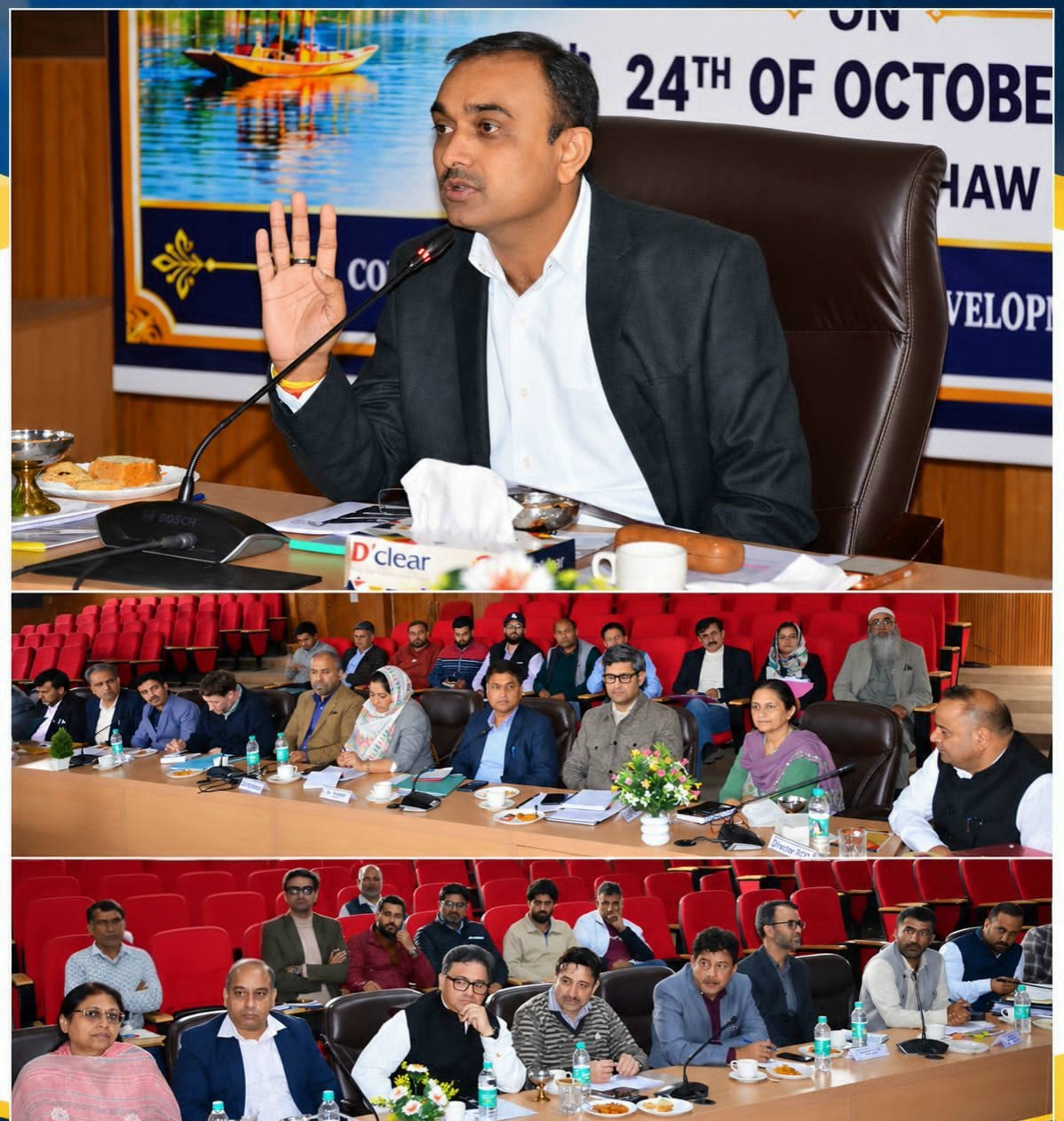
Chairing a comprehensive review meeting at Panchayat Bhawan, Humhama, Budgam, the Secretary assessed the progress of major rural development programmes, including Viksit Bharat–Guarantee for Rozgar and Ajeevika Mission (Gramin) (VB-GRAM-G), Pradhan Mantri Awaas Yojana–Gramin (PMAY-G), Swachh Bharat Mission–Grameen (SBM-G) and Rashtriya Gram Swaraj Abhiyan (RGSA). The review also covered UT CAPEX works, infrastructure for District Development Councils (DDCs), Block Development Councils (BDCs) and Panchayati Raj Institutions (PRIs), Viksit Village projects, financial management, development planning, court cases and administrative compliance.
The meeting was attended by Secretary in RDD Rachna Sharma; Mission Director, NRLM, Shubhra Sharma; Director, RDD Kashmir, Riyaz Ahmad Wani; CEO, IWMP, Rajnish Kumar; Director Finance, Umar Khan; Joint Director Planning, Kamal Kumar Sharma; Additional Secretary, RDD, Waseem Raja; Joint Director, RDD, Mantasha Binti Rashid; Deputy Director Rural Sanitation, Kashmir, Shabir Ahmed Hakak; besides all Assistant Commissioners Development, Assistant Commissioners Panchayats and Executive Engineers of REW in the Kashmir Division.
Reviewing VB-GRAM-G, the Secretary stressed the need to improve implementation, expedite wage and material payments, and strengthen field-level monitoring. He called for regular inspections, improved reporting and greater accountability among officers responsible for executing works under the programme.
He directed officers to ensure the timely completion of incomplete works under VB-GRAM-G and other relevant schemes. Wherever irregularities, excess payments or other recoverable amounts have been identified, the concerned officers were instructed to initiate recovery proceedings in accordance with applicable rules.
Emphasising the importance of effective development planning, the Secretary directed officers to prepare comprehensive Gram Panchayat Development Plans (GPDPs) and ensure their proper approval and accurate uploading on the relevant portals. Deficiencies communicated by the Ministry of Panchayati Raj (MoPR) were to be examined carefully, and discrepancies between approved plans and online records rectified promptly.
He further stressed that the Viksit Gram Panchayat Plans (VGPPs) should incorporate all important activities and interventions relevant to local development, with special attention to provisions for Scheduled Castes (SCs) and Scheduled Tribes (STs). Water-related works and other relevant interventions of the Jal Shakti Department were also to be incorporated wherever applicable.
The Secretary directed officers to utilise Gram Sabha meetings effectively for discussing, validating and documenting proposed developmental activities. Information relating to Information, Education and Communication (IEC) activities, assets created, works undertaken and proposed interventions must be accurately reflected in portal records to ensure transparency, accountability and effective planning at the grassroots level.
Reviewing PMAY-G, the Secretary stressed the need to complete pending houses, expedite verification and approval processes, and take appropriate action in cases involving delayed construction. He directed officers to pursue recoveries wherever warranted and deal with delayed or incomplete houses strictly in accordance with prescribed guidelines.
The meeting also reviewed the progress of UT CAPEX works relating to community development and Panchayati Raj infrastructure. The Secretary emphasised the need to improve the execution of newly approved works while ensuring the timely completion of ongoing projects.
He directed district officers to review the status of Panchayat Ghars and other developmental works, identify pending and uninitiated projects, remove implementation bottlenecks and ensure judicious utilisation of available funds. Officers were instructed to verify the physical and financial progress of works and ensure that the position reported in official records accurately reflected the ground reality.
Reviewing infrastructure projects for DDCs, BDCs and PRI functionaries, the Secretary was informed that, against 46 approved works comprising 10 DDC office buildings, 26 BDC office buildings and 10 PRI residential accommodation projects, 39 works had been taken up, while seven remained uninitiated.
He directed the concerned officers to examine the status of each project, address pending construction and finishing requirements, and ensure proper accounting of funds released and expenditure incurred. Particular attention was to be given to incomplete buildings, pending electrification and projects requiring technical or administrative intervention. Officers were asked to adhere to prescribed guidelines and submit compliance reports.
On Viksit Village projects, the Secretary stressed the need for timely processing of proposals and resolution of deficiencies to facilitate implementation. He also directed officers to submit budget proposals and other requisite information within the prescribed timelines and refer unresolved district-level issues to the higher authorities for appropriate action.
Expressing concern over delays caused by land disputes and other administrative issues, the Secretary called for proactive coordination with Deputy Commissioners, Additional Deputy Commissioners and other concerned authorities to facilitate the execution of stalled projects, particularly those relating to Panchayat infrastructure.
He further directed officers to effectively pursue pending court cases, file objections and replies within the prescribed timelines, and maintain regular follow-up with the concerned authorities to safeguard the department’s interests and prevent avoidable delays.
Taking note of inadequate preparation during the review meeting, the Secretary directed district officers to attend future meetings with complete, updated and verifiable information. He instructed the concerned officers to submit a work-wise status report of all pending projects by the following morning, clearly indicating the present status, reasons for delay and expected date of completion.
The Assistant Commissioners Panchayats (ACPs) and other field functionaries were also directed to submit geo-tagged photographs of pending works along with detailed progress reports and firm completion timelines. Regular field inspections and sustained follow-up were emphasised to ensure that outstanding issues were resolved without further delay.
Reviewing outstanding liabilities, the Secretary directed all concerned officers to implement the Standard Operating Procedure (SOP) already circulated by the department. District- and block-level committees constituted to examine pending liabilities were instructed to scrutinise cases, establish the reasons for non-payment and take necessary action for settlement in accordance with the prescribed mechanism.
He emphasised that genuine liabilities must be examined and settled systematically in accordance with applicable guidelines. Noting that unresolved liabilities had repeatedly created difficulties for the department and field functionaries, he stressed that strict implementation of the prescribed mechanism was essential to resolve genuine cases and prevent the recurrence of payment-related issues.
The Secretary also directed officers to ensure that disaster-related reports were prepared and submitted in the prescribed format and that administrative expenditure was booked under the appropriate heads in accordance with the Ministry’s guidelines.
Encouraging officers to bring genuine operational difficulties to the department’s notice, he assured that implementation-related bottlenecks would be examined for timely resolution.