Srinagar, Oct 7: India’s approval of a Rs 10,000-crore fund for small and medium enterprises could offer a new source of growth capital to businesses in Jammu and Kashmir, where a large base of small firms remains concentrated in traditional sectors such as handicrafts, food processing and horticulture but faces challenges in scaling up, accessing finance and reaching wider markets.
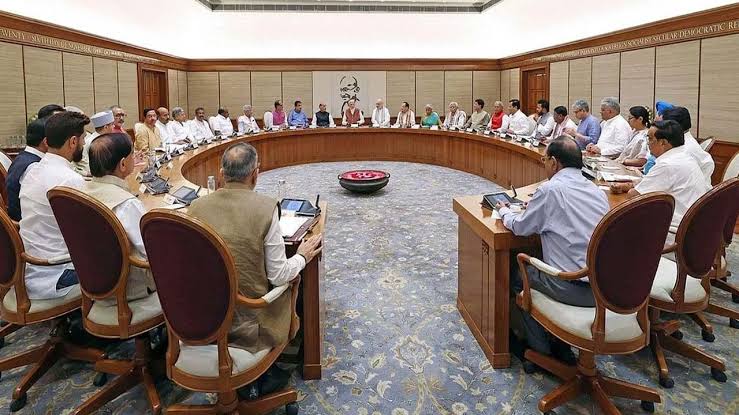
The Union Cabinet on Tuesday approved the government’s commitment of Rs 10,000 crore to establish the SME Growth Fund (SGF), designed to make direct equity investments in small and medium enterprises with a demonstrated business model and potential to expand. The fund is different from conventional credit support because it is intended to provide long-term, or “patient”, equity capital to firms at the growth stage. The government said existing equity funds tend to focus on early-stage businesses and micro enterprises, leaving a financing gap for small and medium firms seeking to scale.
For Kashmir, that distinction could be significant.
The region has a substantial small-business ecosystem spanning handicrafts and handloom, horticulture and food processing, tourism-related services, pharmaceuticals and other manufacturing activities. The Union government’s MSME RAMP portal says handicrafts and cottage industries employ about 340,000 artisans in J&K, while the UT has identified food processing, digital financing, cluster development, export promotion and management upskilling among priorities under its MSME programme.
The Cabinet decision envisages the government committing the Rs 10,000 crore to an Alternative Investment Fund established under the SME Growth Fund framework.
The fund will primarily target small and medium manufacturing enterprises, while also considering firms operating in industrial clusters in Tier-II and Tier-III cities. It will support expansion of production capacity, adoption of advanced technology, overseas market entry, integration into global supply chains and acquisitions or other strategic investments.
The government has not announced a separate allocation for Jammu and Kashmir, nor has it said how much of the Rs 10,000 crore could flow to firms in J&K.
That makes the fund a potential opportunity rather than a guaranteed source of capital for Kashmiri businesses. Much will depend on the eventual investment framework, eligibility criteria, fund managers and the ability of local enterprises to meet the requirements for equity investment.
Under the latest national MSME classification, effective from April 2025, a small enterprise can have investment of up to Rs 25 crore and annual turnover of up to Rs 100 crore, while a medium enterprise can have investment of up to Rs 125 crore and turnover of up to Rs 500 crore.
That puts the fund within reach, at least in principle, of established J&K businesses that have moved beyond the micro-enterprise stage but need substantial capital to expand.
The opportunity comes as Jammu and Kashmir seeks to move more of its economy from small-scale and largely fragmented activity towards organised manufacturing, processing and exports.
The Ministry of MSME’s latest state-level data shows more than 1 million MSMEs registered in J&K, including about 3,500 enterprises classified as small and 229 as medium under Udyam registrations; the larger total includes micro enterprises and units registered through the Udyam Assist Platform.
The numbers also illustrate a central challenge: the overwhelming majority of registered enterprises are micro businesses, while the pool of small and medium firms capable of absorbing larger growth investments is much smaller.
For such firms, equity capital can be particularly important where conventional bank finance alone is insufficient to fund expansion, technology upgrades or acquisitions.
The Cabinet said the new fund is intended precisely to address this stage of the financing cycle, supporting businesses as they move from viability to scale.
The fund’s emphasis on manufacturing and Tier-II and Tier-III industrial clusters could be relevant to J&K’s industrial estates and emerging clusters outside the country’s major metropolitan centres.
The J&K Industries and Commerce Department says the Union Territory’s industrial landscape is dominated by MSMEs and has identified food processing and other manufacturing and service activities as areas with potential. Its industrial policy seeks to strengthen competitiveness, attract investment and generate employment.
Kashmir’s traditional industries could also potentially benefit if firms are able to move beyond artisan-level production into larger, professionally managed enterprises.
The MSME ministry’s J&K programme specifically lists packaging and promotion of GI, One District One Product and Districts as Export Hubs products, buyer-seller meets, cluster development, digital financing and management development among its approved interventions.
That creates a possible link between the new growth fund and sectors such as carpets, shawls, papier-mâché, walnut wood products, food processing and horticulture-based enterprises – provided individual businesses meet the fund’s commercial and investment criteria.
The larger significance for Kashmir may therefore lie not simply in whether local businesses receive money from the new fund, but whether some can make the transition from small, family-run or fragmented operations into scalable enterprises.
A manufacturer could use equity to add production lines or modern machinery. A food-processing company could build cold-chain and packaging capacity. An established handicraft exporter could invest in design, branding and international distribution. A technology company could use growth capital to expand its workforce and markets.
The government’s stated objective is to create companies capable of becoming leaders in their sectors rather than merely providing working capital to businesses struggling to survive.
That distinction could be particularly relevant in a region where employment generation remains a major economic challenge and where expanding private-sector capacity is central to creating jobs outside government recruitment.
The fund is also part of a broader 2026-27 Budget strategy for MSMEs covering equity, liquidity and professional support. The Budget had proposed the Rs 10,000-crore SME Growth Fund alongside additional support for micro enterprises through the Self-Reliant India Fund and measures to build professional support capacity in Tier-II and Tier-III towns.
For Jammu and Kashmir, the immediate question will be whether its small and medium enterprises can develop the scale, financial records, governance structures and growth plans required to attract institutional equity.
The Union government says the fund will support firms with demonstrated viability and scalability.
That could favour businesses that are already formalised, profitable or on a clear growth trajectory, rather than very small enterprises at the beginning of their entrepreneurial journey.
J&K already has programmes aimed at bringing more businesses into the formal MSME system. Under its RAMP plan, the UT has approved projects for Udyam registration, digital financing, export promotion, cluster development and entrepreneurship and management training.
The new fund could therefore add another layer to that ecosystem: credit and grants for starting or stabilising businesses, followed by equity for those capable of scaling.
But its impact on Kashmir will ultimately depend on implementation.
There is no earmarked Kashmir component in the Cabinet announcement, and the government has yet to disclose the detailed investment process. For local industry, the challenge will be to ensure that eligible firms are prepared to compete for growth capital and that the fund’s emphasis on manufacturing, clusters, exports and technology translates into opportunities beyond India’s established industrial centres.
For a region seeking to turn its traditional strengths in crafts, horticulture and tourism into larger commercial enterprises, the Rs 10,000-crore fund could provide a new piece of that transition – if Kashmir’s businesses are able to make the jump from small enterprises to scalable companies.